
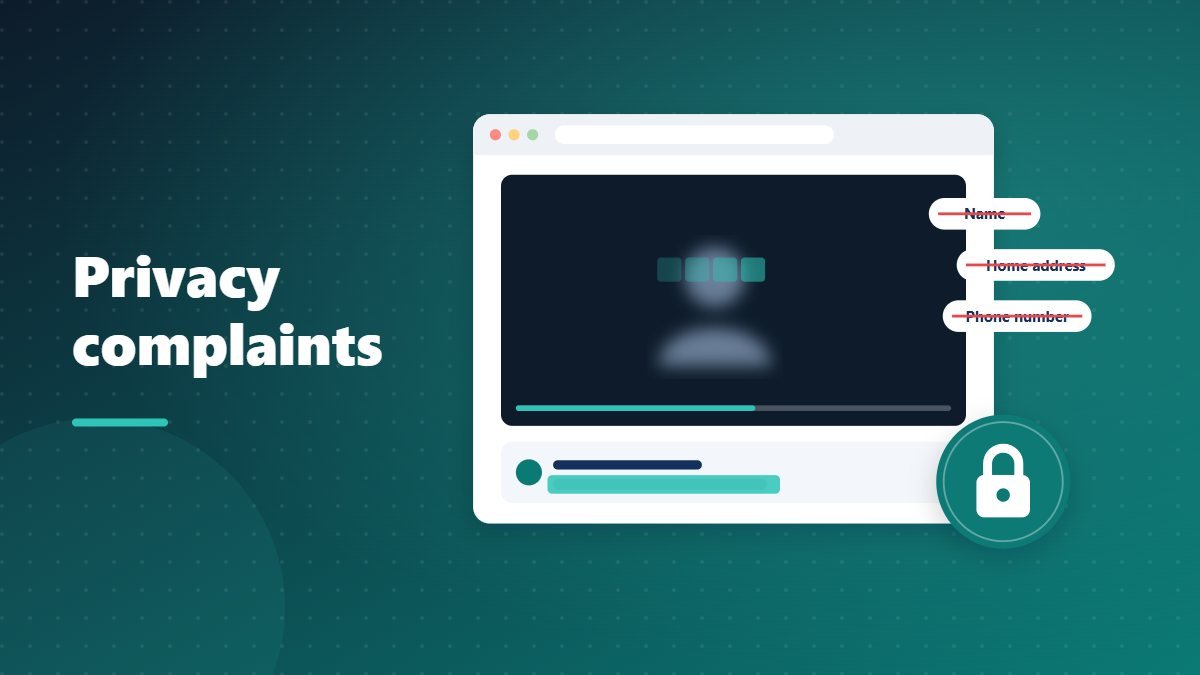
If a YouTube video shows you without your consent, or reveals details such as your full name, address or phone number, YouTube’s privacy process may allow it to be taken down. Unlike a general report, a privacy complaint is assessed against specific criteria, so preparation matters.
Who can file a privacy complaint
In most cases the complaint must come from the person whose privacy is affected. There are exceptions: parents or legal guardians can act for minors, and legal representatives can act in certain situations. Friends and family usually cannot file on your behalf, so if the video is about you, plan to submit it yourself.
What YouTube looks at
Reviewers ask whether you are uniquely identifiable in the video. That can be your face, your voice, your full name, your contact details, your home or another detail that points to you specifically rather than to anyone. They also weigh context:
- Whether the content is in the public interest or newsworthy
- Whether you are a public figure, and whether the video relates to your public role
- Whether the footage was filmed in a public place, and how much it reveals
- Whether the video exposes sensitive information or shows a private setting
Being filmed in public does not automatically mean you have no privacy rights, but it does make the assessment closer.
Step by step
- Watch the video and note every timestamp where you or your information appears
- Write down exactly what identifies you at each point
- Submit the complaint through YouTube’s privacy complaint process, as the affected person
- Keep a copy of what you submitted and the date
YouTube may first give the uploader a short period to remove or edit the video, for example by blurring a face or trimming a section. If the edit removes what identified you, the complaint may be closed. If the video stays up unchanged, YouTube reviews it against its privacy guidelines.
If your complaint is declined
A declined privacy complaint is not always the end. Videos that also contain threats, encourage others to target you or reveal private information to harass you may fall under harassment policies. Videos that state false facts about you may raise legal issues. See our defamation and harassment service for those routes.
Clearing search results afterwards
Once the video is removed, its title and thumbnail can linger in Google for a while. Our guide on removing YouTube videos from Google search explains how to speed that up.
If you would rather have the complaint prepared for you, our privacy complaint service handles the evidence and drafting so filing takes you only a few minutes.